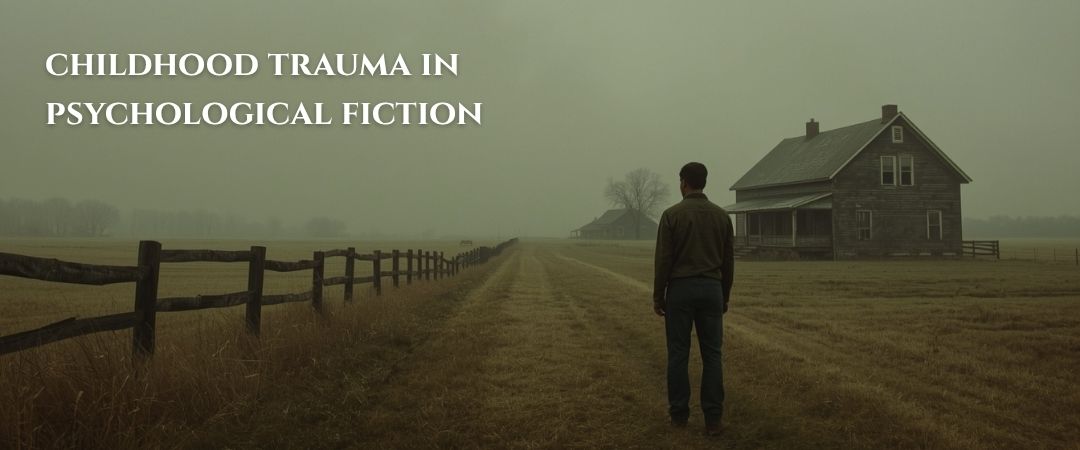
When people hear “war trauma,” they usually picture the battlefield. They think of gunfire, loss, nightmares, and the shock of returning to civilian life. These experiences are important, but psychological fiction often asks a different question: what if someone learned to stay alert, hide fear, or take on too much long before ever seeing a battlefield?
This question adds depth to trauma fiction. The past rarely comes back as a simple explanation. Instead, it shows up in habits, reactions, guilt, and relationships.
Childhood Trauma Does Not Always Look Dramatic
Some tough childhoods can look normal from the outside. The family works hard, the parents provide, and the child behaves well. Nothing seems clearly wrong.
Still, a child might learn that love depends on being obedient, helpful, or keeping emotions in check. He gets good at reading others and hiding what he needs. Adults might praise this maturity without wondering why it was needed so soon.
The Centers for Disease Control and Prevention says that difficult childhood experiences can have long-term effects on health, opportunities, and well-being. Fiction cannot diagnose anyone, but it can show how early experiences shape how someone understands safety, duty, and love.
The “Good Son” Can Become the Man Who Carries Everyone
In The Weight Between, Jimmy Bauer grows up on a Minnesota farm where work is seen as the answer to nearly every problem. His father values discipline, strength, and silence. Jimmy learns that a man proves himself by handling whatever comes his way.
His mother brings a different kind of pressure. She truly loves him, but she depends a lot on his closeness. Jimmy feels responsible for her feelings. Saying no does not feel like independence; it feels like leaving her behind.
This is similar to emotional parentification, where a child takes on emotional roles meant for adults. This pattern teaches Jimmy to judge his worth by how much he can do for others.
This pattern stays with him as an adult. In Vietnam, responsibility is about survival. After Tony dies, Jimmy wonders if he could have stopped it. His survivor’s guilt matches an old belief: if someone is hurt, he must have failed to protect them.
War Makes the Old Rules Impossible to Ignore
When Jimmy comes home, the farm is almost the same. His room, the fields, and his family are all still there. He is the one who feels different.
Everyday sounds make him tense. Crowds feel dangerous. Even a friendly touch makes him pull back before he can think. He falls back on what he knows: work harder and talk less.
That rule used to help him cope, but now it traps him at home. His family notices the change but does not have the words to talk about it. Their silence does not mean they do not care. They just know how to offer strength, routine, and comfort.
The novel does not say that combat and childhood are the same. Instead, it shows how later trauma can make old emotional habits even harder to break. Jimmy sees his home differently because he finally questions what those childhood moments meant to him.
Psychological Fiction Shows the Person Behind the Symptoms
A clinical description can explain things like hypervigilance, emotional numbness, or survivor’s guilt. A novel can show what these experiences feel like for one person.
A novel can put readers at a family dinner where no one talks about the war. It can show why someone looks for exits or pulls away from people he loves. It can also capture the confusion of learning that a happy childhood memory hid a burden he was too young to see.
Patricia Nakamura does not come into Jimmy’s life with a speech or an easy answer. She listens, asks thoughtful questions, and lets him figure things out in his own time. She does not rescue him, but she gives him enough safety to look at his experiences honestly.
Healing Does Not Mean Returning to an Earlier Self
Some trauma stories treat recovery as simply going back to normal. The character faces one memory, understands it, and becomes who he was before.
Realistic psychological fiction allows for a less tidy ending. Jimmy cannot undo Vietnam, bring Tony back, or get back the childhood he missed. But he can choose what those experiences will mean for the life he creates next.
He learns to remember Tony as a whole person, not just by how he died. He accepts that he can love his mother even if their relationship was not perfect. He also learns to accept help without seeing it as a weakness.
JP Guggia’s novel shows emotional resilience as something that grows over time. Jimmy does not let go of every burden. He learns which ones are his, which ones never were, and which ones he wants to keep carrying.
This is why childhood trauma in psychological fiction can feel so personal. The genre does not ask readers to forget the past. At its best, it shows how someone can look at the story they grew up with and still choose what comes next.