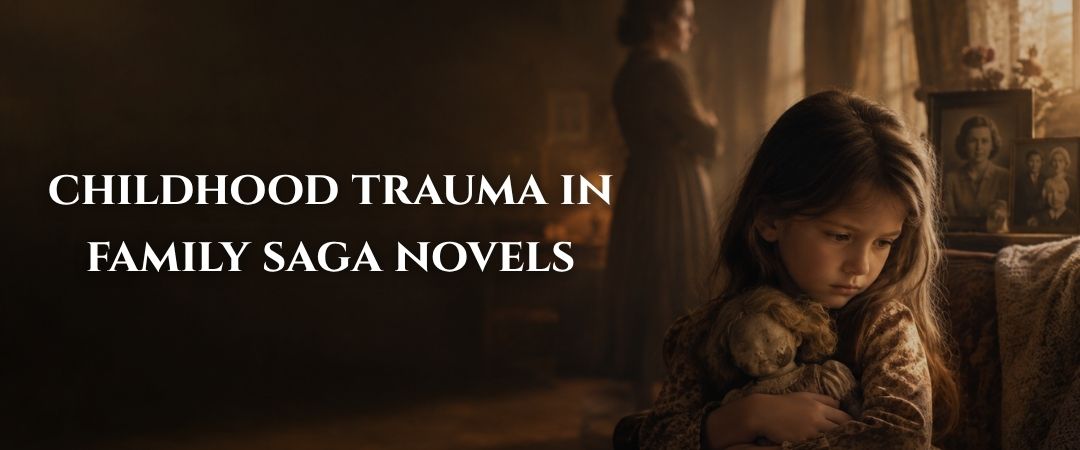
Families rarely call it trauma while it is happening. They call it discipline. They say a child needs rules, an adult knows best, or private matters belong inside the home. Once those explanations settle in, even people who feel uneasy may stop asking questions.
Family saga novels stay with those choices long enough to show what follows. They can trace the original harm, the relatives who lived around it, and the decisions made years later by someone who grew up inside it. In Blind-Eye Love, JP Guggia follows Meadow from a childhood ruled by fear into marriage, motherhood, and grandparenthood. One question runs through those years: what stops happening after Meadow?
When Abuse Is Called Discipline
Meadow is raised by her grandparents, Pete and Janie, after her parents can no longer provide a stable home. Aunt Betty steps into the gap. She is convinced that firm discipline will keep Meadow from becoming like her troubled mother and father.
Almost anything can become an offense. Meadow makes a mess while washing dishes, touches Betty’s belongings, brings home disappointing grades, or speaks out of turn. Betty answers with threats, humiliation, slaps, belts, or wire hangers. Afterward, she may kiss Meadow or remind her how much the family has done for her. Punishment and affection arrive from the same person.
Other people see a capable, hardworking woman who has sacrificed for her niece. That public version of Betty makes Meadow’s account easier to doubt. It also gives the family a comfortable explanation: Betty is strict because she cares.
The novel reaches further back and reveals abuse in Betty’s own girlhood, something she never discusses or properly faces. Her past offers context for the control she later seeks. It does not clear her of responsibility. Plenty of people endure childhood trauma without harming a child, and the story never needs to pretend otherwise.
A Loving Family Can Still Leave a Child Unprotected
Pete and Janie give Meadow some of her safest memories. She works beside Janie in the garden, plays in the fields, and knows that her grandparents cherish her. Their home is not empty of warmth.
It is also the home where Betty hurts her.
The grandparents sometimes question Betty’s severity. Then they step back. They accept that she knows more about raising Meadow, avoid a fight, or help explain away an injury. Their love is real, but it does not provide the protection Meadow needs.
A family saga can hold this uneasy truth. Harm can continue without every relative approving of it. Some people cause it. Others sense that something is wrong and keep the household moving as if nothing happened. Silence does the rest.
What Meadow Carries Into Adulthood
As a child, Meadow creates a private place to speak. Her doll Mary becomes a confidant who listens after punishments. Through Mary, Meadow says what she cannot safely say aloud. She already understands that honesty has consequences inside her family.
She also remains funny, social, and increasingly defiant. Friends give her somewhere to be believed. As she grows older, Betty’s physical control weakens, though the criticism continues. Marriage to Jamey brings distance and a partner who learns the truth gradually, often through memories Meadow mentions almost casually.
The past becomes harder to keep at a distance after Meadow has children. Following Melissa’s birth, she struggles with depression and fears that she might treat Theo and Melissa as Betty treated her. Instead of hiding those thoughts, she tells Jamey that she needs help for a woman raised to keep family trouble private, saying that aloud is a serious change.
Breaking the Pattern Without Pretending the Past Is Gone
As JP Guggia discussed in his book, Meadow does not break the cycle of generational trauma in one grand confrontation. She asks for support. She listens to her fear without treating it as fate. She sets limits that nobody set for her. Later, she speaks with a therapist rather than protecting the family’s silence.
Her relationship with Betty never turns into a tidy story of reconciliation. When Betty develops dementia, Meadow helps arrange her care. She brings in outside support and keeps enough distance to manage the responsibility without surrendering control of her own life. She handles the duty without rewriting their history.
By the time Meadow has children and grandchildren, the old memories are still present. The rules in her own home are different. Fear is no longer presented as love, and obedience is no longer treated as the price of belonging. In Blind-Eye Love, the pattern ends with Meadow. Her children and grandchildren receive the protection she once needed herself.