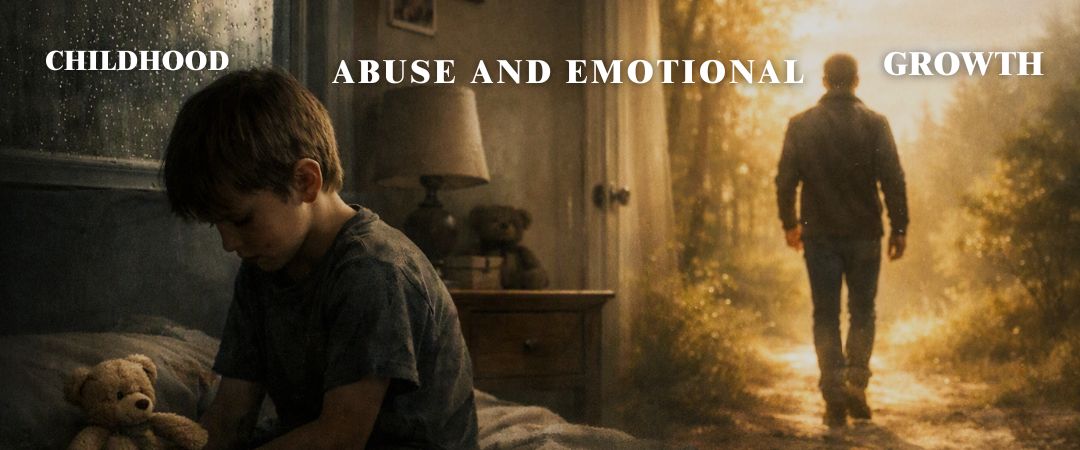
Childhood turns out to be the best phase of our lives. It’s when we feel protected, loved, and accepted without conditions. It is where we learn to trust, express our emotions, and build confidence in who we are. But for many, home becomes the very place where fear replaces comfort and silence replaces security.
However, when a child undergoes painful abuse, it does not simply disappear with age. Instead, they quietly shape the way people think, feel, love, and respond to the world around them. The connection between childhood abuse and emotional growth is profound because the emotional wounds carried from childhood often influence adulthood in ways survivors may not immediately recognize.
It’s only when we learn through stories, fictional characters, and the journeys of some people that we understand that childhood abuse impacts our lives in more ways than we could actually understand.
How Childhood Abuse Changes Emotional Development:
Emotional growth depends on feeling safe enough to explore emotions without fear of punishment or rejection. When children grow up in abusive households, they often learn to suppress their feelings to avoid conflict. Over time, this survival strategy becomes part of their personality.
One of the most overlooked long-term consequences of childhood emotional abuse is the belief that love must be earned. Instead of feeling accepted for who they are, children begin believing they are only worthy of affection when they meet impossible expectations. These beliefs often remain deeply rooted well into adulthood.
Similar instances could be witnessed in the book Blind-Eye Love by JP Guggia, which explores this painful reality through Meadow’s story, revealing how hidden family abuse can leave lasting scars while also showing that healing and resilience are possible.
When Love Becomes Confusing
In Blind-Eye Love, Meadow is raised under the strict authority of Aunt Betty, whose harsh discipline is accepted by family members because they believe she knows best. Behind a respectable public image, Meadow experiences ongoing emotional and physical mistreatment while those around her fail to recognize the damage.
This reflects a reality faced by many survivors. Children rarely question the behavior of trusted adults because they naturally assume caregivers are acting out of love. As a result, they often mistake control, fear, and criticism for genuine care, making healthy relationships harder to recognize later in life.
How Abusive Childhood Experiences Affect Mental Health
One of the clearest examples of how abusive childhood experiences affect mental health is the lasting impact on self-esteem and emotional well-being. Emotional abuse may not leave visible scars, but its psychological effects can remain for decades.
Children who are constantly criticized or rejected often grow into adults who question their worth despite their achievements. Anxiety, depression, chronic self-doubt, and feelings of shame become common struggles because the negative messages they received during childhood become part of their inner voice.
JP Guggia’s book reminds readers that emotional wounds are just as real as physical ones and deserve the same level of understanding and support.
The Psychological Effects of Growing Up in an Abusive Environment:
The psychological effects of growing up in an abusive environment extend far beyond childhood. Living in constant uncertainty teaches children to remain alert for danger, even when no immediate threat exists.
Many survivors become perfectionists because mistakes once resulted in punishment or humiliation. Others avoid expressing emotions altogether because vulnerability was never safe. Others often misunderstand these behaviors, but they developed as survival mechanisms rather than personal weaknesses.
Blind-Eye Love illustrates how years of emotional control gradually shape Meadow’s emotional responses, showing that healing requires replacing fear with safety and self-acceptance.
How Early Life Trauma Shapes Personality and Decision Making:
It is interesting to note that one of the lasting effects of abuse is how early-life trauma shapes personality and decision-making. Childhood experiences influence confidence, boundaries, and the willingness to trust personal instincts.
Adults who experienced abuse may hesitate to pursue opportunities because they fear failure or rejection. Others constantly seek approval from people around them because they learned their value depended on pleasing authority figures.
Some become fiercely independent, refusing help from anyone, while others struggle to make decisions without reassurance. These behaviors are often rooted in childhood survival rather than conscious choice.
The Impact of Childhood Abuse on Trust and Attachment
Perhaps one of the deepest emotional wounds is the impact of childhood abuse on trust and attachment. Healthy relationships develop when children experience consistency, emotional support, and unconditional care. Abuse interrupts that process by teaching children that the people they depend on can also become the source of fear.
As adults, survivors may struggle to trust others completely or become overly attached because they fear abandonment. Forming secure relationships often requires learning that genuine love does not rely on intimidation, control, or emotional manipulation.
Meadow’s story demonstrates how difficult this journey can be, but it also shows that meaningful relationships become possible when cycles of abuse are finally recognized and challenged.
Healing Begins with Awareness
Although Blind-Eye Love examines painful family dynamics, it ultimately delivers a hopeful message. The story acknowledges that abuse can contribute to anxiety, depression, PTSD, and emotional struggles, but it also reminds readers that these experiences do not have to define an entire life.
Healing begins with recognizing that abuse was never normal, regardless of how long it lasted or who inflicted it. By confronting painful memories with understanding instead of shame, survivors can begin rebuilding their confidence, relationships, and emotional well-being.
Understanding the connection between childhood abuse and emotional growth encourages greater compassion for survivors and greater awareness of the hidden wounds many people carry.